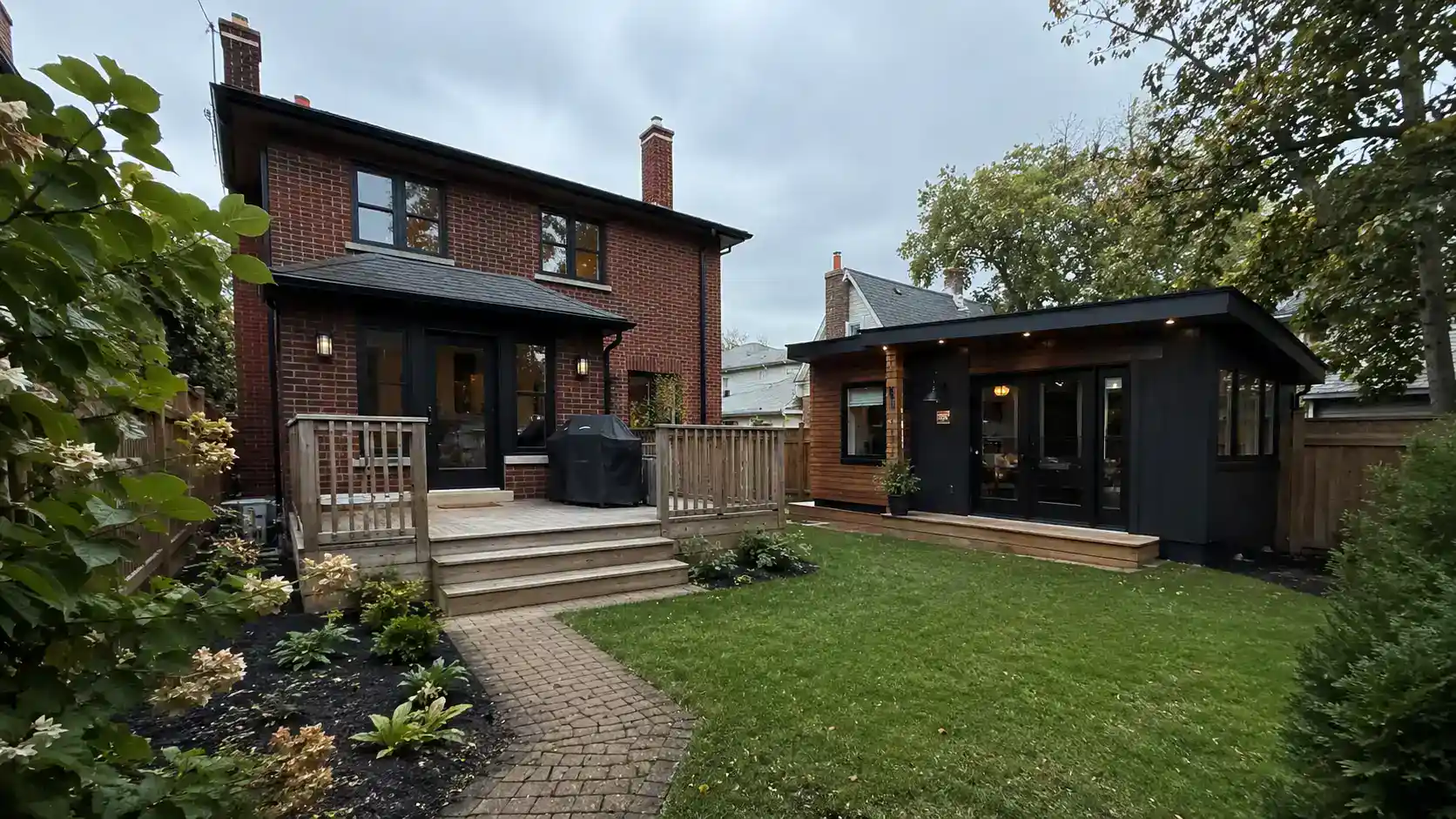

While the OESC does not explicitly mandate a subpanel for every secondary suite, dedicated subpanels are the standard approach for legal suites in Toronto. They simplify circuit separation, streamline ESA inspection, and make future maintenance or expansion far easier. In many Toronto suite projects, a dedicated subpanel is the approach electricians and inspectors are used to seeing because it makes circuit separation easier to verify.
Subpanels At a Glance
You Likely Need a Secondary Suite Subpanel If:
- You’re converting a basement into a legal apartment
- You’re building a laneway or garden suite
- Your building permit requires separate electrical distribution
- You’re adding metering for tenant billing
- The City or ESA requires a load calculation showing dedicated circuits
A Typical Installation Includes:
- Dedicated subpanel (60A–100A depending on suite size and loads)
- Feeder cable from main panel to subpanel
- Separate branch circuits for kitchen, bathroom, living areas, and laundry
- AFCI and GFCI protection as required by current OESC
- ESA permit + inspection
Timeline:
1–2 days on-site. The permit and inspection scheduling may add 1–2 weeks.
Why Toronto Suites Need Their Own Panel
Proper secondary suite’s are more than a spare room running a micro fridge and a hot plate. Under the 2024 Ontario Building Code, a legal secondary suite is a self-contained dwelling unit with its own kitchen, bathroom, sleeping area, and entrance. From an electrical standpoint, that means the suite needs it’s own branch circuits, proper protection, and enough capacity to run a full tenant load without dragging down the main house.
Even though it’s technically possible to supply a suite from the main panel if circuits are properly dedicated, the service capacity is confirmed, and no prohibited sharing occurs, it’s not ideal. In practice, a dedicated subpanel is the best practice recommended by experienced electricians when building a legal suite. The reason why is that it creates a clean boundary between the main dwelling and the suite: each unit has its own breakers, its own circuit protection, and — if you choose — its own metering.
Common Toronto Secondary Suite Scenarios
Basement Apartments
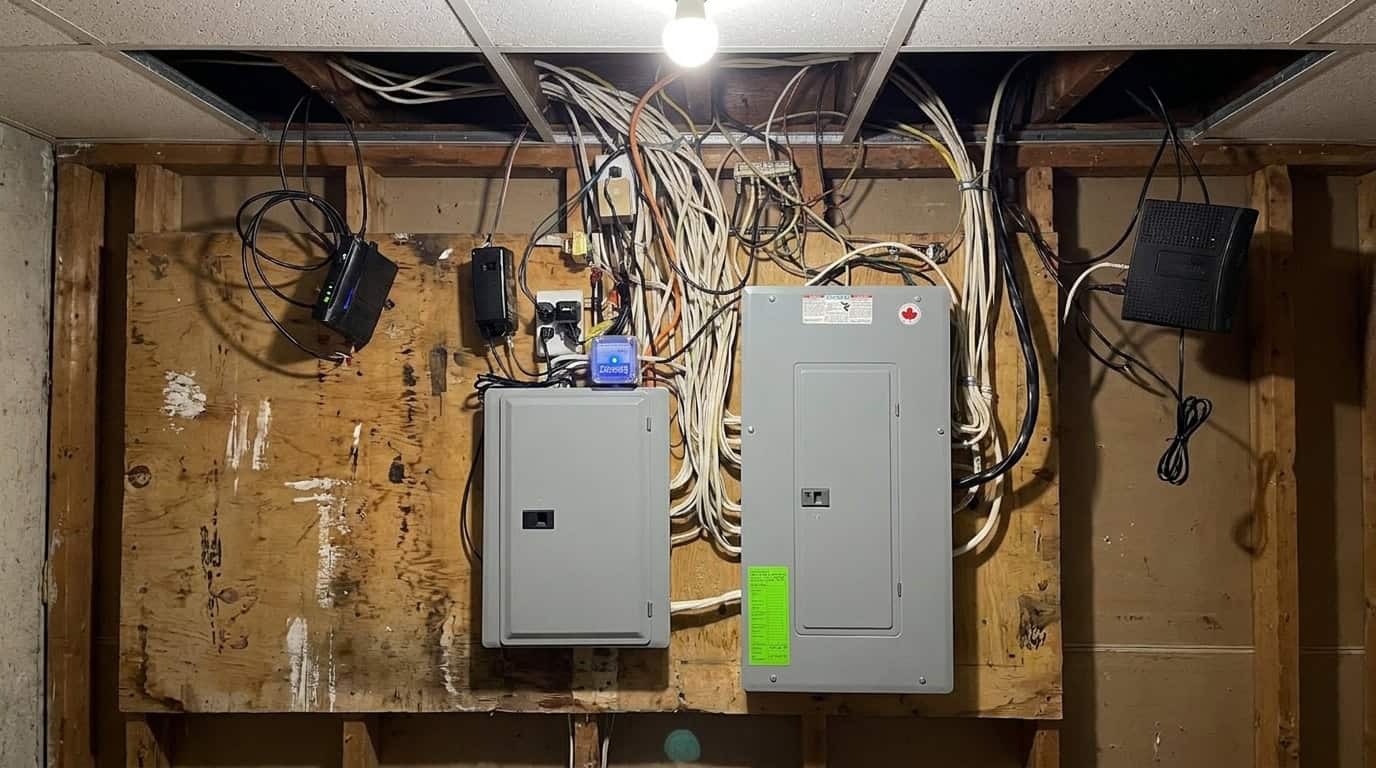
This is a fairly common scenario in neighbourhoods like the Danforth where a homeowner has been renting their basement for years with no permit. The suite runs off a few circuits tapped from the main panel with no dedicated kitchen circuits, no GFCI in the bathroom, no AFCI protection on receptacle circuits. At some point, the City does an inspection to check for permits and requests a dedicated subpanel to achieve compliance.
Garden Suites
Another common scenario around the East York area is where a homeowner plans to build a garden suite in their backyard. Under Toronto’s garden suite bylaws, a subpanel needs to be fed from the main house panel via an underground feeder cable, which means trenching across the yard, proper burial depth, a weatherproof disconnect at the suite, and a grounding electrode at the detached structure where required.
Triplex Conversions
In many neighbourhoods like the Junction, single-family homes are now being converted to three units under the 2024 OBC multiplex provisions. For this to work well, each unit needs its own subpanel and potentially its own meter. This is because the existing 100-amp service can’t support three households. To solve this, a subpanel installation is paired with a 200-amp service upgrade and a meter stack.
In-law Suites
These self contained units designed for family members are common in neighbourhoods all over Toronto including Scarborough, Vaughan and Markham. For this kind of project, the main panel has four open spaces which is typically not enough. Ideally, a legal suite commonly requires 10–16 branch circuits with a subpanel fed from a new 60-amp breaker in the main panel.
What a Suite Subpanel Installation Involves
| Component | What Happens |
|---|---|
| Load calculation | Determines the suite’s electrical demand and the feeder size required — commonly needed as part of the building permit application |
| Feeder breaker | A dedicated double-pole breaker (typically 60A) is added to the main panel to supply the subpanel |
| Feeder cable | Sized to match the breaker. For interior runs, a 60A feeder is commonly #6 copper NMD90, depending on conditions. Underground feeders to detached suites require cable or conductors rated for wet/buried locations, often in conduit |
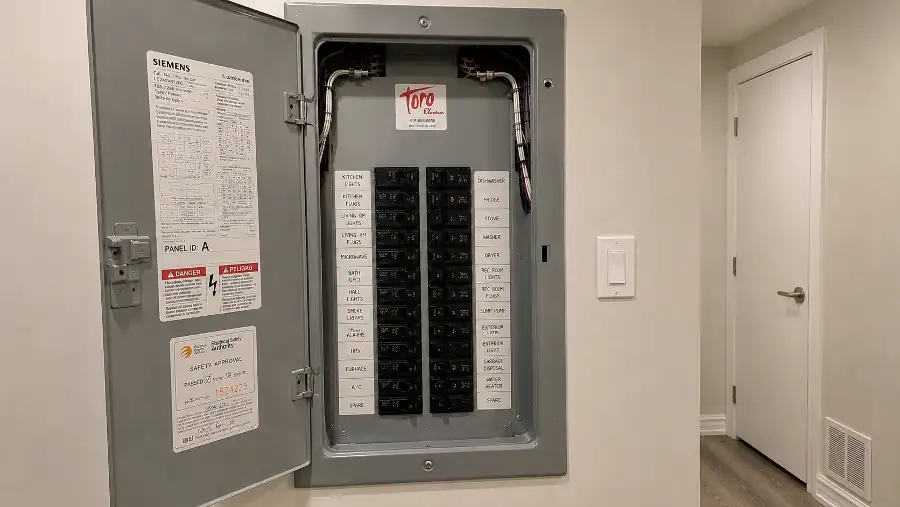
| Subpanel | A load centre (typically 12–24 spaces) installed in the suite — usually in a mechanical room, utility closet, or near the suite entrance |
| Branch circuits | Circuits wired to the suite’s kitchen, bathroom, living areas, bedrooms, laundry, smoke/CO alarms, and HVAC |
| AFCI / GFCI protection | AFCI protection is required on most 125V, 15A and 20A receptacle circuits in dwelling units under the current OESC. GFCI protection is required on kitchen countertop, bathroom, laundry, and outdoor receptacle circuits |
| Grounding and bonding | In the subpanel, the neutral bus must remain isolated from the panel enclosure, while the grounding bus is bonded to the enclosure — neutrals and grounds are separated downstream of the service disconnect |
| Disconnecting means | Detached structures (garden suites, laneway houses) typically require a disconnecting means at the building supplied by the feeder |
| ESA permit + inspection | Mandatory. Your electrician files the permit; ESA inspection is required before the electrical work is approved and closed |
Neutral-ground separation is one of the most common defects flagged in subpanel work.
In a subpanel (unlike the main panel), the neutral bus is not bonded to the enclosure. The neutral must be isolated; the equipment grounding conductors bond to the enclosure through the grounding bus. Getting this wrong is one of the most frequent mistakes in unpermitted suite wiring — and it will fail inspection.
Does Your Main Service Support a Subpanel?
This is the first question — and it determines the scope of the entire project.
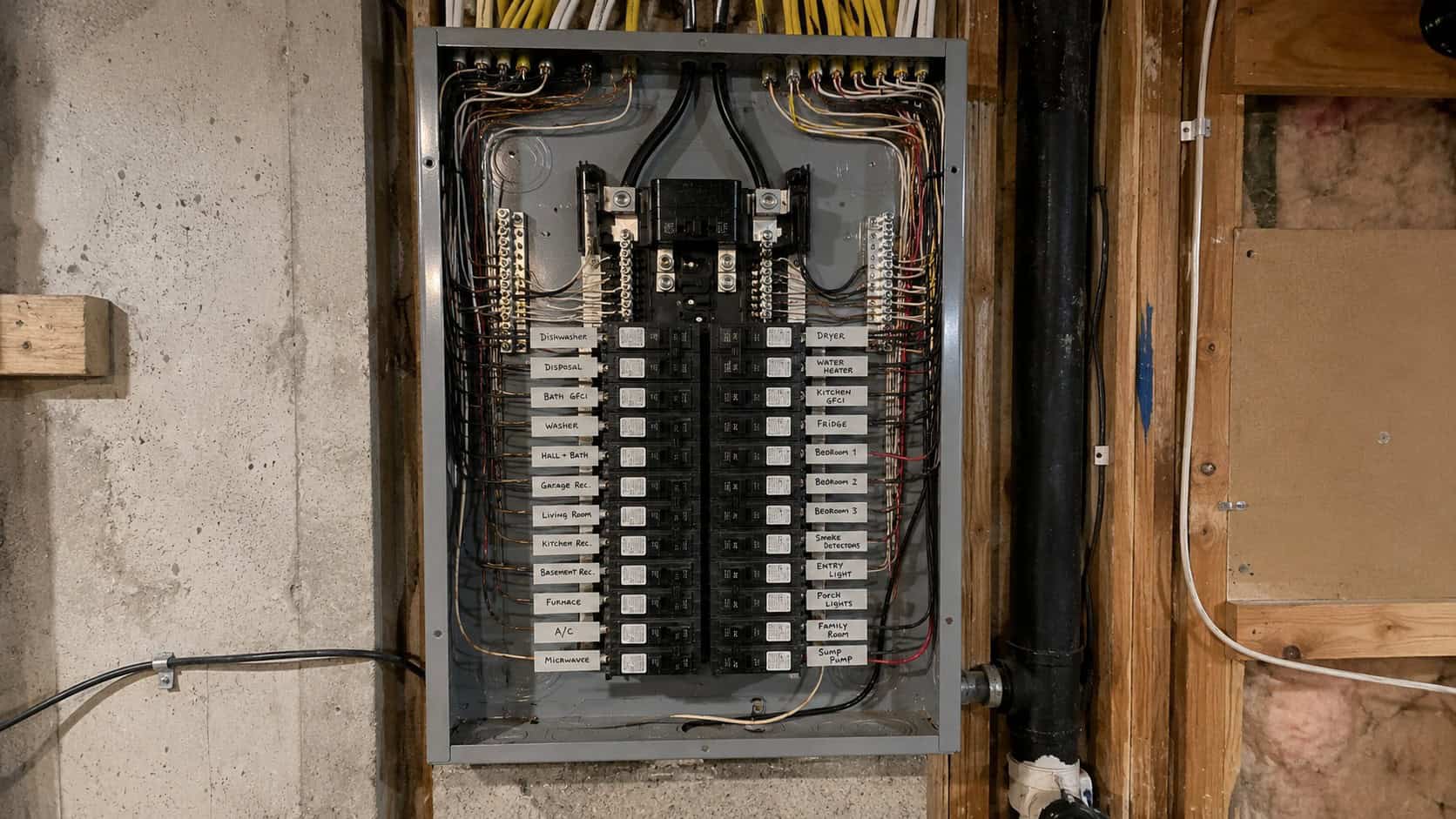
If you have a 200-amp service with available breaker spaces in the main panel, adding a 60-amp subpanel for a suite is usually straightforward. The capacity is there; it’s a matter of running the feeder and wiring the suite.
If you have a 100-amp service, the math gets tight fast. A single household on 100 amps can work. Two households on 100 amps — each with a kitchen, bathroom, and heating — usually can’t. A load calculation under OESC Section 8 determines whether your existing service can support the added demand.
If the load calculation shows you’re over capacity, the subpanel installation gets paired with a 200-amp service upgrade. This is common in older Toronto homes — the suite is the trigger, but the service was already undersized for modern loads.
Approved energy management or load-control systems
Permitted under OESC Section 8 demand management provisions can sometimes reduce calculated demand and avoid a full service upgrade — but their applicability depends on the specific installation, the loads involved, and ESA acceptance of the engineered approach. A formal load calculation is required to demonstrate compliance
Circuits a Legal Suite Typically Requires
A self-contained secondary suite needs more circuits than most homeowners expect. The OESC and Ontario Building Code set minimums, but practical installation usually exceeds them.
| Area | Typical Circuits |
|---|---|
| Kitchen | At least 2 dedicated small-appliance countertop circuits (typically 20A), fridge receptacle circuit (often dedicated), 1 dedicated circuit for range/cooktop (240V if electric) |
| Bathroom | GFCI-protected bathroom receptacle circuit(s), sized and arranged to meet OESC requirements |
| Living / bedroom areas | 1–3 general lighting and receptacle circuits (AFCI protection required on most 125V, 15A and 20A receptacle circuits in dwelling units) |
| Laundry | 1 × 20A dedicated circuit for washer receptacle, 1 × 30A 240V circuit if in-suite dryer |
| HVAC | Dedicated circuit for furnace/air handler, heat pump, or baseboard heaters |
| Smoke / CO alarms | Interconnected, hardwired — on their own circuit or shared with lighting |
| Bathroom fan / range hood | Often on dedicated circuits depending on amperage |
A legal suite commonly ends up with 10–16 branch circuits once kitchen, laundry, HVAC, lighting, and required protection are accounted for. A 12-space subpanel can handle a small suite; larger suites or those with in-suite laundry and electric cooking typically need 16–24 spaces.
Tamper-resistant receptacles
Required in dwelling units under the current OESC — all 125V, 15A and 20A receptacles in the suite must be tamper-resistant.
What Affects the Cost
| Factor | Why It Matters |
|---|---|
| Suite location relative to main panel | A basement suite directly below the main panel is the shortest feeder run. A garden suite across the yard requires trenching, longer cable rated for burial, a weatherproof disconnect, and potentially a grounding electrode — significantly more labour and material |
| Finished vs. unfinished basement | Running cables through open joists is fast. Running cables behind finished drywall, through bulkheads, or across a dropped ceiling adds time and drywall repair |
| Service upgrade required | If the existing service can’t support the added load, a 200-amp service upgrade adds scope, cost, and Toronto Hydro coordination |
| Metering | A check meter or separate Toronto Hydro meter for tenant billing adds equipment and sometimes utility involvement |
| Electric vs. gas appliances | An all-electric suite (electric range, electric dryer, electric heat) draws far more amperage than a gas-equipped suite — and may push the feeder size from 60A to 100A |
| Number of circuits | More bedrooms, in-suite laundry, and larger kitchens mean more circuits, more wire, and a larger subpanel |
| AFCI / GFCI devices or breakers | Code-required but more expensive than standard breakers — and a dwelling unit suite will need several |
The most accurate way to understand cost is a site visit.
We assess your main panel, your service size, and the suite layout — then provide a clear scope before any work begins.
ESA Permits and the Building Permit Connection
A secondary suite subpanel requires an ESA electrical permit — filed by your electrician before work starts, inspected after completion.
The electrical work is also connected to the broader City of Toronto building permit for the suite itself. The City commonly requires electrical load information or confirmation of service capacity as part of the permit process for secondary suites. Requirements vary by project scope and permit pathway, but expect City reviewers to ask for service-capacity documentation — particularly for suites that add a kitchen, laundry, or electric heating.
Typical sequence:
- Load calculation completed — confirms service capacity
- Building permit application submitted (includes electrical load documentation where required)
- ESA electrical permit filed by your electrician
- Electrical rough-in (subpanel, feeders, branch circuit wiring)
- ESA rough-in inspection (before drywall closes the walls)
- Suite finished — drywall, fixtures, devices installed
- ESA final inspection — required before the electrical work is approved and closed
- City of Toronto final inspection and occupancy
Un-permitted suite wiring creates serious problems.
It can create insurance coverage issues, expose you to liability if a tenant is injured, and create complications at resale when a home inspector or buyer’s lawyer asks for ESA certificates.
Fast Answers
Can I just run a few circuits from my main panel to the suite?
Technically, a secondary suite can be supplied from the main panel provided the circuits are properly dedicated to the suite, the service capacity supports the additional load, and no prohibited sharing occurs. In practice, a dedicated subpanel is the standard approach for legal suites in Toronto — it’s cleaner, easier to inspect, and provides clear circuit separation for future servicing. In the vast majority of Toronto suite projects, a subpanel is what electricians and inspectors are used to seeing.
Does the suite need its own meter?
Not always. The OESC doesn’t require a separate meter for a secondary suite within a single-family dwelling. However, if you want to bill a tenant for electricity, you’ll need either a check meter (privately installed, not utility-billed) or a separate Toronto Hydro meter (which requires a meter stack and utility coordination). Many landlords use check meters for simplicity.
Can I install the subpanel myself?
In Ontario, homeowners can technically do their own electrical work on their primary residence with an ESA homeowner permit. However, subpanel installations involve working inside the main panel near energized bus bars, sizing feeders correctly, and getting the neutral-ground separation right. Most homeowners — and most building officials — prefer this work be done by a licensed electrician. Errors in feeder sizing or neutral-ground bonding are common in DIY subpanel work and will fail ESA inspection.
What if my main panel is full?
If there’s no room for a feeder breaker in the main panel, the main panel itself may need to be upgraded or replaced with a larger unit as part of the project. This is common in older Toronto homes with 16- or 24-space panels that are already at capacity.
How long does the installation take?
Typically 1–2 days for the subpanel, feeder, and branch circuit wiring in a basement suite with open-ceiling access. Finished basements, garden suites with trenching, and projects paired with service upgrades take longer.
Will my power be off during the installation?
Briefly — usually a few hours while the feeder breaker is installed in the main panel and connections are made. Not the full-day outage of a service upgrade. The main house stays powered during most of the branch circuit wiring.
What about detached suites — garden houses or laneway houses?
Detached structures add scope: the feeder must be run underground using cable or conductors rated for wet/buried locations (often in conduit), a disconnecting means is typically required at the detached building, and a grounding electrode may be required at the structure depending on the feeder configuration. Trenching across a Toronto backyard — especially with landscaping, concrete, or existing utilities — adds time and cost.
Why This Matters Beyond the Permit
A properly installed subpanel isn’t just about passing inspection. It protects your property and your tenant:
- Circuit separation — a problem in the suite doesn’t take down the main house
- Proper protection — AFCI and GFCI devices or breakers where code requires them, reducing fire and shock risk
- Insurance compliance — insurers verify that secondary suites have permitted, inspected electrical work
- Resale value — a legal suite with ESA-certified electrical adds real value; an unpermitted suite creates real liability
- Tenant safety — dedicated circuits, proper grounding, and code-compliant protection are the baseline for a safe living space
Why Toro Electric
ESA Licensed · Toronto Panel Specialists · Serving the GTA
- Secondary suite electrical work is a core part of what we do — not a one-off side job
- We handle the full scope — load calculations, ESA permits, subpanel installation, branch circuit wiring, and coordination with your general contractor and the City’s building permit process
- We know older Toronto homes — finished basements with limited access, undersized services, full panels, aluminum wiring, and the specific complications that come with adding a legal suite to a house that wasn’t built for one
“We were converting our Danforth semi basement into a legal apartment. Toro handled the load calculation, installed a 60-amp subpanel with all the required circuits, and coordinated the ESA inspection — which passed first time. Made the whole permit process smoother.”
Related Services
- 200 Amp Service Upgrade Toronto — When the existing service can’t support the added suite demand
- EV Energy Management Systems — Smart load management for adding EV chargers alongside suite loads
- Electrical Panel Repair — Fixing double-tapped breakers, failed breakers, and immediate panel issues
- Fuse Box Upgrade — Replacing fuse panels with modern breaker protection before adding a suite
- OESC Load Calculations — Professional load assessments for suite permits and multiplex conversions
Ready to Add a Subpanel for Your Suite?
If you’re building a legal secondary suite — basement apartment, laneway house, or garden suite — the electrical starts with a dedicated subpanel and the right service capacity to support it.
Book a Secondary Suite Electrical Assessment → Call Toro Electric: (888) 308-2145